How to balance blood sugar with food: meal structure that works
Many people feel a dip two or three hours after eating, then reach for something sweet. That pattern is common and often relates to how a meal is built. The good news is that small changes in structure can make energy feel steadier.
What happens after a meal
Digestible carbohydrate is broken down into glucose, which enters the blood. Protein, fibre and fat slow that process, so the rise is gentler. A meal of refined carbohydrate on its own is absorbed faster than the same carbohydrate eaten with protein, vegetables and some healthy fat.
A simple plate structure
- Start with vegetables or salad.
- Add a palm sized portion of protein.
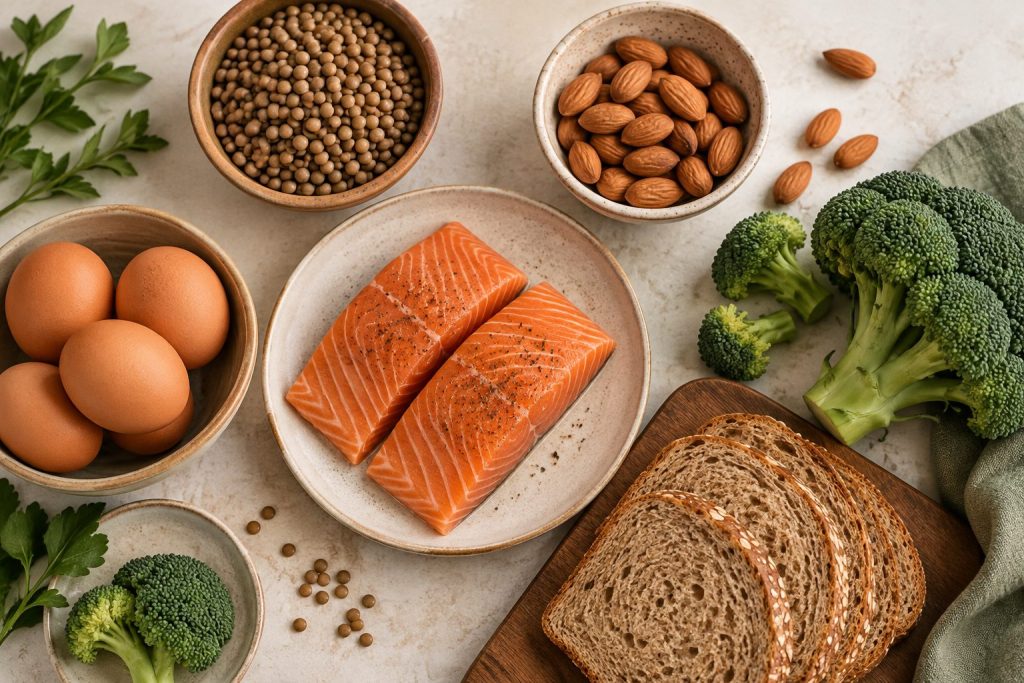
- Choose slower carbohydrates such as oats, beans, lentils, wholegrain bread or potatoes with skin.
- Include some unsaturated fat such as olive oil, nuts, seeds or oily fish.
Small order and timing tweaks
Eating protein and vegetables before the starchy part of a meal has been shown in small studies to lower the post meal rise. Having fruit with a handful of nuts rather than alone, and not leaving long gaps followed by large meals, also helps many people.
Breakfast is a common weak point
Toast and jam or a sweet breakfast bar is mostly fast carbohydrate. Try eggs with wholegrain toast, or porridge with milk, seeds and berries. See our guide to how much protein you need each day for ideas.
Stress and sleep matter too
Poor sleep and high stress can change appetite and cravings. A meal plan alone may not shift the pattern if those are not in the picture. We cover this in does diet affect sleep.
A note on medical conditions
If you have diabetes or have been told your blood sugar is high, follow your medical team’s advice. Nutrition guidance can sit alongside it but does not replace it. Everyone else can book a nutrition consultation to review meal structure, existing results and daily routine together.
This article is general nutrition information and does not replace medical advice. If you have a medical condition, speak to your GP or healthcare professional.