How much protein do I need each day?
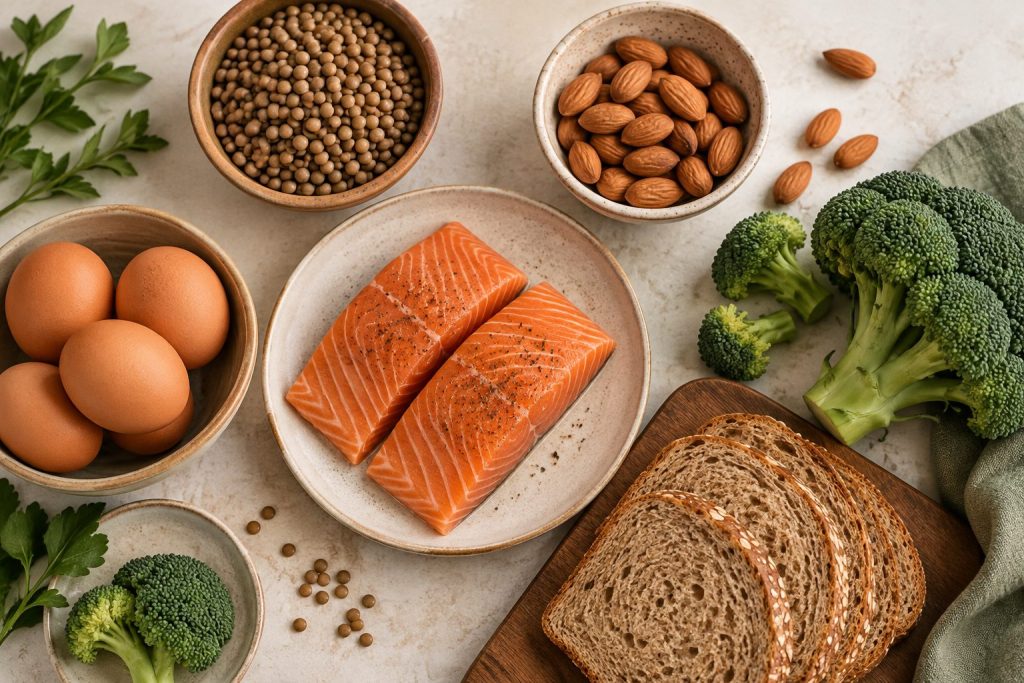
Most healthy adults need less protein than supplement marketing implies, yet many people under eat it at breakfast and over eat it at dinner. Getting the amount and the spread right is usually more useful than chasing a big number.
The reference intake
The European Food Safety Authority sets a population reference intake of 0.83 grams of protein per kilogram of body weight per day for healthy adults. For a 70 kg adult that is about 58 grams. Needs rise during pregnancy and breastfeeding, in older age, during illness and recovery, and with heavy training.
Why spread matters
Protein is not stored the way carbohydrate and fat are, so regular intake matters. A common pattern is a small amount at breakfast, a moderate lunch and a large evening meal. Moving some of that protein earlier can help with fullness and steadier energy through the afternoon.
Easy ways to add protein earlier
- Eggs, Greek yoghurt or skyr with fruit and seeds.
- Porridge made with milk, with nuts and seeds stirred through.
- Beans or lentils added to a lunchtime soup or salad.
- Fish, poultry, tofu or tempeh at the main meal.
Plant and animal sources
Both can work. Beans, lentils, tofu, nuts, seeds and wholegrains give protein with fibre. Fish, eggs, dairy and poultry are compact sources. If you eat mostly plants, variety across the day matters more than counting every gram.
When to get personal advice
If you have a kidney condition, are managing an eating disorder history, are pregnant, training hard or recovering from illness, general numbers may not fit. That is where a one to one conversation helps. See how nutrition consultations work, or read how we think about balancing blood sugar with food.
A simple check
Look at your last three days. Where did your protein sit, and was breakfast close to empty? One change at one meal is a good first step. If you want it tailored to your routine, a nutrition consultant in Dublin can build it around your week.
This article is general nutrition information and does not replace medical advice. If you have a medical condition, speak to your GP or healthcare professional.